
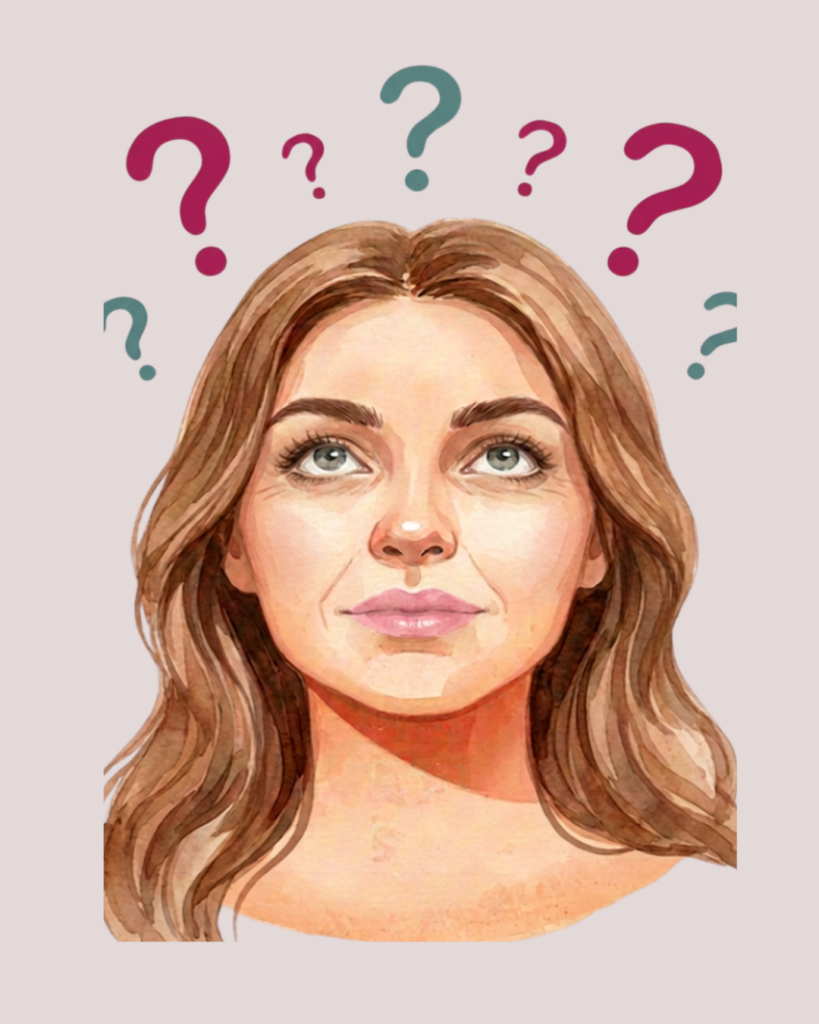
There is a question that sits at the heart of women’s identity in midlife.
Not because it’s complicated. Because it’s terrifying in its simplicity.
Who am I outside of the roles I play?
Strip away mother. Partner. Professional. Daughter. Friend. Caretaker. The capable one. The reliable one. The one who keeps everything running.
What’s left?
For many women the honest answer is “I don’t know”.
And I want to tell you something important about that answer.
It’s not a failure. It’s a beginning.
women’s identity in midlife and why this question surfaces now
Midlife has a way of loosening the scaffolding.
Children grow up and need you differently. Careers plateau or shift. Relationships change. The body begins its own transformation. And the roles that gave the first half of life its shape and purpose start to feel less certain.
For decades identity was built around doing. Around being needed. Around showing up for everyone else. And there’s nothing wrong with any of that. It comes from love, from commitment, from genuine care.
But somewhere in all of that giving, many women lose the thread back to themselves. Not dramatically. But it happens quietly and gradually. Until one day they look in the mirror and feel like a stranger.
That estrangement and that sense of when did I stop feeling like myself, is one of the most common experiences of women’s identity in midlife. And one of the least talked about.
the performing self: a women’s identity in midlife story
Here’s something I’ve been sitting with myself this week.
I asked myself this question, who am I outside of the roles I play? And I went blank.
I’ve spent 25 years helping other women find themselves. I built elutee around this exact question. I have a journal with 64 pages dedicated to identity and self discovery.
And when I really asked, I actually don’t know.
What I noticed is that I’ve become quite good at performing a version of myself. Professional. Capable. Warm. Considered. All of those things are real. But they’re also roles. And somewhere underneath all of them is a woman who is funnier than she lets on. More relaxed. Less certain. More curious.
The performing self is exhausting to maintain. And the longer we perform the further we get from the real answer.
Most women navigating women’s identity in midlife are doing this. Not consciously. Not dishonestly. Just gradually, over years, becoming more of what’s expected and less of what’s true.
she’s not gone, she’s just gotten quiet
The woman underneath all the roles doesn’t disappear. She just gets very quiet when she’s not needed.
She shows up in the unwitnessed moments. Early morning before the day starts. A walk with no destination. The laugh that comes out before you’ve had time to curate it. The opinion you almost voiced before you remembered to be diplomatic.
She’s there. Waiting. Not impatiently. Just waiting.
And the question who am I outside of the roles I play isn’t an existential crisis. It’s an invitation to: Start paying attention to those quiet moments. Notice when she surfaces. Stop performing just long enough to hear what she actually thinks.
This is the quiet truth about women’s identity in midlife. She was never lost. She just stopped being listened to.
how to start finding the answer
The answer to this question doesn’t arrive all at once. It comes in fragments. In noticing. In small brave moments of honesty.
Here are four ways women’s identity in midlife starts to surface:
Notice the unwitnessed moments
When do you feel most like yourself? Not performing. Not being useful. Just quietly existing. It might be on a run. Reading alone. Cooking without anyone watching. Pay attention to those moments this week. They’re telling you something.
Ask what you’ve set aside
What did you love before you became everything to everyone? What interests, passions, ways of being got quietly shelved to make room for the roles? Not everything from the past belongs in the future, but some of it does. What’s worth reclaiming?
Notice where you perform
Where in your life do you show up as a slightly edited version of yourself? At work? Online? In certain relationships? The gap between the performed version and the real one is worth examining. Not with judgment. With curiosity.
Sit with not knowing
If you ask yourself this question and the answer doesn’t come, that is okay. Sit with the not knowing. Most women navigating identity in midlife are there. The not knowing isn’t emptiness. It’s the beginning of something honest.
There is actually a name for what many women experience in midlife. Psychologists call it an identity crisis. Not in the dramatic sense, but in the developmental sense. Research suggests that identity exploration doesn’t stop in adolescence. It continues throughout life, and the women who keep questioning, adjusting and staying curious about who they are tend to find the greatest fulfilment over time. If you’re feeling uncertain about who you are right now, that uncertainty isn’t weakness. It’s actually the beginning of something healthier. You can read more about identity and how it develops across adulthood in this article from Psychology Today.
Women’s identity in midlife: a question worth carrying
Women’s identity in midlife isn’t something you figure out in an afternoon. It’s something you uncover slowly: through honest questions, through quiet attention, through the gradual permission to be more of who you actually are and less of who everyone needs you to be.
This week I want to leave you with one thing.
Notice one moment where you stop performing. Where something in you relaxes. Where you’re not being anyone’s anything.
Don’t analyse it. Just notice it.
That noticing, that is the beginning of the answer.
A place to go deeper
If you’re ready to explore women’s identity in midlife more deeply the elutee journal is a good place to begin. It’s 64 pages of guided questions covering identity, worth, the body, relationships, purpose and change.
It’s free when you join elutee.